Is Your Water Bill Lying to You? How to Track Down Silent Leaks and Wasteful Fixtures Before They Drain Your Wallet
You open your water bill, do a double-take, and wonder if someone left a hose running for a month. Sound familiar? The frustrating truth is that most household water waste doesn't come from obvious drips or burst pipes — it sneaks out through toilets that run a few seconds too long, faucets with worn washers, and supply lines you've never once looked at. The EPA estimates that the average American household leaks nearly 10,000 gallons of water every single year. That's not just an environmental problem. That's money circling the drain.
The good news? You don't need a plumber or any fancy equipment to track most of this down. A little patience, a notepad, and about an hour of your Saturday morning can tell you a whole lot about what's happening inside your walls and under your sinks.
Start at the Meter — Before You Touch Anything Else
Your water meter is the most honest thing in your house. It doesn't lie, and it doesn't guess. So before you go poking around under sinks, head outside and find your meter box (usually near the curb or sidewalk).
Here's the test: Make sure nobody in the house is using any water — no dishwasher running, no toilet flushing, no ice maker cycling. Write down the exact reading on the meter. Wait 30 minutes without using a single drop. Check the reading again.
If the numbers moved, you've got a leak somewhere. Simple as that. Some meters also have a small triangular or star-shaped leak indicator dial that spins even when very small amounts of water pass through. If that little dial is turning while everything's off, something's definitely wrong.
This baseline test is step one because it tells you whether you're hunting a ghost or not. No movement? Great — your issue might just be inefficient fixtures rather than active leaks. Movement? Time to go hunting.
The Toilet: Your Biggest Suspect
Toilets are responsible for roughly 30% of indoor water use, and they're also the sneakiest leakers in the house. A running toilet can waste anywhere from 200 to 700 gallons of water per day — and because the sound is often just a faint hiss or an occasional refill cycle, most homeowners tune it right out.
The dye test is your best friend here. Grab some food coloring (or a dye tablet from a hardware store — they're practically free). Drop it into the toilet tank — not the bowl — and wait 15 minutes without flushing. If color shows up in the bowl, your flapper isn't sealing properly and water is constantly trickling through.
Flappers are one of the cheapest, easiest fixes in all of home repair. A replacement flapper costs about $5 to $10 at any hardware store and takes maybe 10 minutes to swap out. If you've never done it before, there's genuinely nothing intimidating about it — turn off the water supply valve behind the toilet, flush to drain the tank, unhook the old flapper, snap the new one on, and you're done.
Also check the fill valve while you're in there. If water is trickling into the overflow tube (that tall tube in the center of the tank), your water level is set too high. Most fill valves have an adjustment screw or clip that lets you lower the level easily.
Work Through Every Faucet and Supply Line
Once you've dealt with toilets, move through the house faucet by faucet. This sounds tedious, but it goes fast. You're looking for a few things:
- Visible drips at the spout when the faucet is fully off
- Moisture or mineral staining around the base of the faucet
- Soft spots or discoloration under the sink cabinet — a sign that slow dripping has been happening for a while
- Corrosion on supply line connections, which can indicate a slow weep you haven't noticed
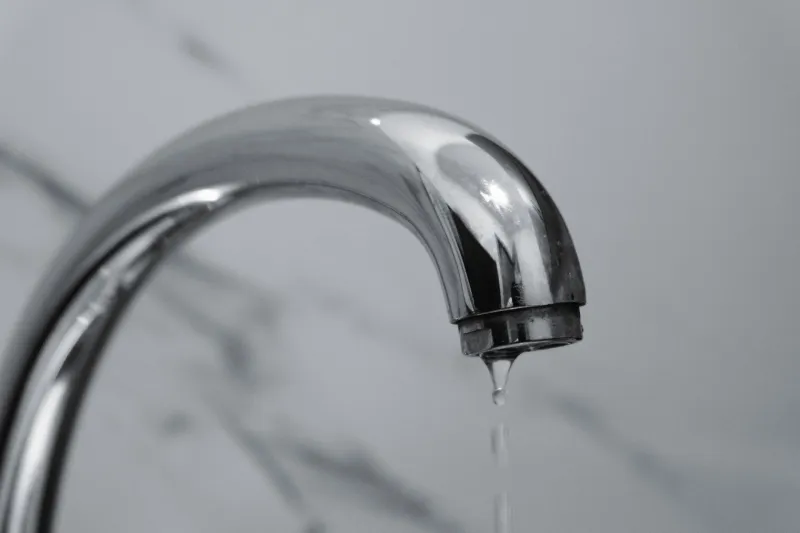
A faucet that drips just once per second wastes more than 3,000 gallons a year. The fix is usually a worn-out cartridge or O-ring, both of which are inexpensive and widely available at home improvement stores. Just make sure you know your faucet's brand and model before you head out — cartridges aren't universal.
Don't forget to check supply lines themselves. Those braided stainless or plastic hoses connecting your shutoff valves to the faucet and toilet can develop slow leaks at the fittings. Run your fingers along each connection and feel for moisture. Even a slight dampness deserves attention.
Check Under the Kitchen Sink (Seriously, Open That Cabinet)
The cabinet under the kitchen sink is one of those spaces most people avoid unless they need the dish soap. But it's worth a thorough look at least twice a year. Pull everything out and inspect the drain connections, the P-trap, and the supply lines.
Look for:
- Watermarks or soft, swollen cabinet flooring (a sign of past or ongoing leaks)
- White mineral deposits around pipe joints
- Any moisture on the pipes themselves
If you have a garbage disposal, check where it connects to the drain. The seal between the disposal and the sink basin can fail over time, especially on older units.
Don't Overlook the Water Heater and Washing Machine
These two appliances are easy to forget during a plumbing audit, but both can be significant sources of waste.
For your water heater, look at the base and the pressure relief valve. A small puddle near the base or rust staining on the floor beneath it suggests a slow leak that will eventually become a big one. The pressure relief valve — that pipe sticking out of the side — should be dry. If it's damp or you hear occasional dripping from it, the valve may need to be replaced.
For washing machines, pull the unit away from the wall and inspect the hot and cold water supply hoses. These are high-pressure hoses, and if they're rubber (rather than braided stainless), they have a finite lifespan. Look for bulging, cracking, or corrosion at the fittings. Replacing both hoses as preventive maintenance every 5 years is a genuinely smart move — a burst washing machine hose is one of the most common causes of major water damage in US homes.
Upgrade Fixtures That Are Quietly Wasteful
Not every water problem is a leak. Sometimes fixtures are just old and inefficient. If your showerheads predate 2010, there's a good chance they're using 2.5 gallons per minute or more. Modern WaterSense-certified showerheads use 2.0 GPM or less — a difference that adds up to thousands of gallons over the course of a year for an average household.
Same goes for faucet aerators. These little screens screw onto the end of your faucet spout and restrict flow without sacrificing pressure. They cost a few dollars and take 30 seconds to install. If your kitchen or bathroom faucets are flowing at full blast, adding or replacing aerators is one of the highest-return upgrades you can make for almost zero effort.
Make It a Habit, Not a One-Time Fix
A plumbing audit isn't a once-and-done project. Pipes age, flappers wear out, and connections loosen over time. Building a quick check into your twice-yearly home maintenance routine — maybe in the spring before summer irrigation season and again in the fall — keeps small issues from turning into expensive surprises.
Take notes when you do your walkthrough. Write down what you checked, what you found, and what you fixed. It sounds overly formal, but having a record makes the next audit faster and helps you spot patterns — like a toilet that keeps needing a new flapper, which might point to a deeper issue with the flush valve seat.
Your water bill shouldn't be a mystery. With a couple of hours and a methodical approach, you can figure out exactly where your money is going — and stop it from going there.