The Tool Shed Reality Check: What You Actually Need (And What's Just Taking Up Space)
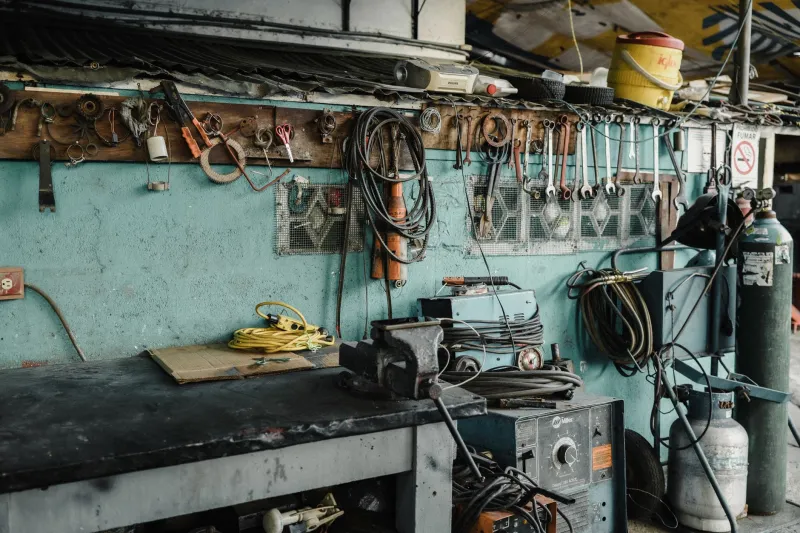
Somewhere between your first DIY project and your fifteenth, something shifts. What started as a modest toolbox becomes a wall of pegboard, a rolling cabinet, a stack of cases in the corner, and a growing collection of single-use gadgets you bought for a project you barely remember. Sound familiar?
Here's the uncomfortable truth: more tools don't make you a better DIYer. The right tools do. And for the vast majority of home improvement projects most American homeowners will ever tackle, the core list is a lot shorter than the tool industry wants you to believe.
This isn't about going minimal for the sake of it. It's about knowing what actually earns its shelf space — and what's quietly robbing you of storage, money, and time spent hunting for things you actually need.
Why the "Buy It Just in Case" Mentality Costs You
Tool acquisition creep is real. It usually starts innocently — you buy a specialty bit set for one project, a oscillating multi-tool because it seemed useful, a laser level because it was on sale. Each individual purchase makes sense in the moment. Collectively, they add up to hundreds or even thousands of dollars in equipment that rarely sees daylight.
There's also a cognitive cost. A cluttered workspace slows you down. When you can't find your tape measure because it's buried under a grout float you've used twice, every project starts with a frustrating scavenger hunt. Simplifying your toolkit isn't just about space — it's about working more efficiently.
The Core 25: Tools That Handle Almost Everything
These are the tools that earn permanent, unquestioned real estate in any serious homeowner's garage.
Measuring and Marking
- 25-foot tape measure (the longer reach matters more than you'd think)
- Combination square
- Chalk line
- Pencils and a marking knife
Cutting
- Circular saw (handles 80% of the cuts a miter saw would)
- Jigsaw (curves, cutouts, and versatility a circular saw can't touch)
- Handsaw (for when power isn't practical)
- Utility knife with extra blades
Fastening
- Cordless drill/driver — this is non-negotiable, and a good one is worth the investment
- Impact driver (pairs with the drill for heavy fastening work)
- Hammer (a 16-oz claw hammer handles framing, finish work, and demo)
- Screwdriver set, both flathead and Phillips in multiple sizes
Leveling and Layout
- 4-foot level
- 9-inch torpedo level
- Stud finder
Finishing and Surface Work
- Random orbital sander
- Putty knife set
- Caulk gun
- Paintbrushes and a quality roller setup
Safety and Support
- Safety glasses, hearing protection, dust masks
- A solid 6-foot step ladder
- Work gloves
Plumbing and Electrical Basics
- Adjustable wrench and slip-joint pliers
- Needle-nose pliers
- Non-contact voltage tester (cheap, essential, possibly life-saving)
- Pipe wrench
That's roughly 25-28 items depending on how you count. With this list, you can handle framing, drywall, painting, basic plumbing repairs, flooring installation, cabinet work, trim, and dozens of other common projects.
The "Probably Don't Need It" List
This is where it gets controversial — because some of these tools are genuinely great. The question isn't whether they're useful in isolation. It's whether they're useful enough, often enough, to justify owning them.
Miter saw: A circular saw with a quality blade and a simple cutting jig handles most of what a miter saw does. If you're doing a major trim or flooring project, rent a miter saw for the weekend. Don't store one for years between uses.
Oscillating multi-tool: Beloved by contractors who use them daily. For the average homeowner, it solves problems you rarely have. The cuts it makes can usually be made with tools you already own, just with slightly more effort.
Rotary tool (Dremel-style): Fun to own. Rarely essential. Most homeowners use it for one project and then it lives in a drawer forever.
Wet tile saw: Unless you're doing tile work every year, rent it. They're bulky, messy, and require storage space that's hard to justify.
Plate joiner/biscuit joiner: Great for furniture makers. For general home repair? You'll reach for screws and wood glue every time.
Air compressor and nail gun combo: This one's more nuanced. If you do a lot of trim work or deck building, a finish nailer pays for itself. But for occasional use, a well-swung hammer does the job. Compressors also take up significant space and require maintenance.
Specialty drill bits beyond a basic set: Most projects need a standard bit set, a few spade bits, and maybe a hole saw kit. The 47-piece sets with bits you'll never identify are overkill.
When Renting Beats Owning Every Time
The tool rental section at your local Home Depot or Lowe's is genuinely underused by homeowners. For anything you'll use once or twice a year at most — floor sanders, tile saws, drain snakes, pipe threaders, concrete mixers, scaffolding — renting is almost always the smarter financial move.
A good rule of thumb: if you can't think of three separate projects in the next two years where you'd use a tool, rent it when the need comes up. You'll save money and storage space.
Decluttering What You've Already Accumulated
If your garage is already overrun, a purge is in order. Here's a practical approach:
The "used in 18 months" test. If you haven't touched it in a year and a half, and you can't name a specific upcoming project where you'll need it, it goes.
Duplicates. You don't need three hammers, two tape measures, or four screwdrivers of the same size. Keep the best one of each.
Broken or worn-out tools. A dull saw blade, a stripped screwdriver, a cracked level — these aren't tools anymore. They're liabilities. Toss them.
Specialty tools from old projects. That grout float from the bathroom tile job in 2019? The wallpaper scorer? If the project is done and you have no plans to repeat it, let it go.
Donate usable tools to Habitat for Humanity's ReStore, local tool libraries, or community makerspaces. Someone will get real use out of what's just collecting dust in your garage.
Invest Up, Not Out
Here's the reframe that changes how you think about tools: instead of buying more tools, buy better versions of the ones you actually use. A high-quality cordless drill from a reputable brand — Milwaukee, DeWalt, Makita — will outlast three cheap ones and perform better on every project. Same goes for your circular saw, your sander, and your level.
Quality over quantity isn't just a cliché. It's genuinely how experienced tradespeople think about their gear. The goal isn't a garage that impresses people. It's a garage where you can find what you need in 30 seconds and trust that it'll work when you pick it up.
The Payoff
A leaner, well-organized toolkit makes every project more enjoyable. Less time hunting, less money tied up in stuff you don't use, less guilt every time you look at the corner where the oscillating tool lives in its original packaging. Know what you need, buy it well, rent what you don't, and let go of the rest. Your garage — and your weekends — will be better for it.