Basement Cracks Are Talking — Here's What They're Saying (And What It'll Cost You to Ignore Them)
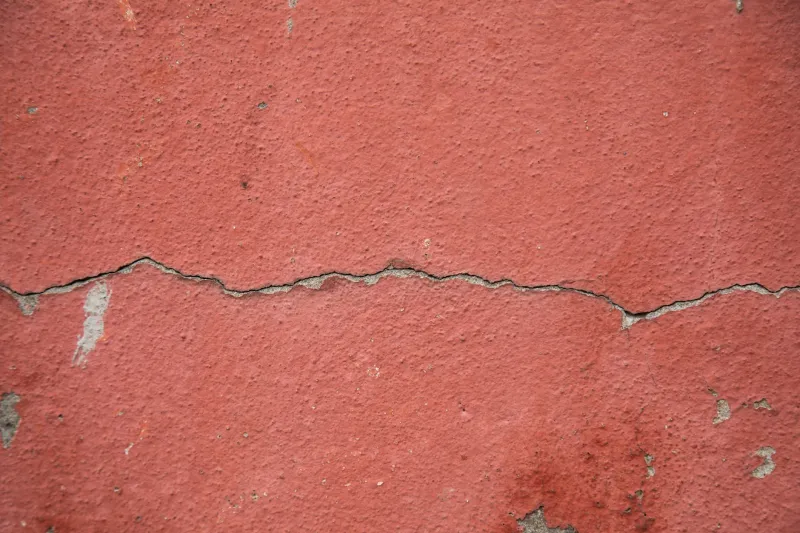
Most homeowners do the same thing when they spot a crack in the basement wall: they stare at it for a second, convince themselves it's probably fine, and go back upstairs. Repeat that cycle for a few years, and what started as a $500 fix can quietly balloon into a $20,000 structural nightmare.
Foundation issues don't get better on their own. They get slower or faster, but they don't reverse. The good news? Understanding what you're actually looking at — and what it means for your wallet — takes a lot of the fear out of the equation. This isn't about panicking. It's about being the kind of homeowner who stays ahead of the expensive stuff.
Why Foundation Problems Are So Easy to Dismiss
Here's the thing about foundation damage: it rarely announces itself dramatically. There's no burst pipe, no ceiling collapse, no obvious emergency. Instead, you get a crack here, a sticky door there, maybe a window that suddenly doesn't quite close right. Each symptom on its own feels minor. Together, they're your house trying to tell you something important.
The other reason people ignore it? The word "foundation" sounds expensive and scary, so the instinct is to avoid the conversation entirely. But avoidance is exactly what turns a manageable repair into a financial gut punch.
Warning Signs That Go Beyond the Obvious Crack
Visible cracks are the most talked-about red flag, but they're not the only one. Before you even head to the basement, walk your home's interior and exterior with fresh eyes.
Inside the house:
- Doors or windows that have started sticking or won't latch properly — especially if this is new
- Gaps forming between walls and the ceiling or floor
- Floors that feel noticeably uneven or springy in spots they didn't used to be
- Drywall cracks appearing at the corners of door and window frames (diagonal cracks are particularly worth noting)
- Baseboards pulling away from the wall
Outside the house:
- Visible gaps between the foundation and the sill plate (the wood sitting on top of the foundation wall)
- Bowing or leaning in the foundation walls themselves
- Soil pulling away from the foundation, creating a gap around the perimeter
- Water pooling near the foundation after rain instead of draining away
Any one of these, combined with basement cracking, deserves more than a second glance.
Decoding the Cracks: Which Ones Should Scare You?
Not all cracks are created equal. Here's a practical breakdown:
Hairline cracks in poured concrete walls — These are extremely common and often just the result of concrete curing and minor settling. If they're thin, dry, and not growing, they're usually low priority. Monitor them by marking the ends with a pencil and dating it. Check back in 60–90 days.
Vertical cracks — Also fairly common in poured concrete foundations. Often caused by settling or shrinkage. If they're narrow and not leaking water, they can typically be sealed with epoxy or polyurethane injection as a DIY repair. Still worth monitoring.
Horizontal cracks — This is where you stop DIY-ing and start calling professionals. Horizontal cracks in block or poured concrete walls indicate lateral pressure from the soil outside — meaning the wall is being pushed inward. This is a structural issue, not a cosmetic one.
Diagonal or stair-step cracks — These often point to differential settling, where one part of the foundation is sinking faster than another. Stair-step patterns in block or brick foundations are a classic sign. Diagonal cracks at corners of poured walls also deserve professional evaluation.
Cracks with displacement — If one side of the crack is higher or lower than the other (called "offset"), that's a red flag regardless of crack type. Get eyes on it professionally.
Active water intrusion — Any crack that's letting water into your basement isn't just a structural concern — it's a moisture and mold problem waiting to happen.
The Real Cost Curve: Why Waiting Always Costs More
Let's talk numbers, because this is ultimately a financial decision.
A simple epoxy crack injection for a non-structural vertical crack? You're looking at roughly $250–$800 depending on length and location, and it's something many DIYers can tackle themselves with a kit from the hardware store.
Waterproofing a leaking crack professionally — applying interior or exterior sealants, drainage systems — typically runs $2,000–$7,000 depending on the scope.
Wall stabilization for a bowing or cracking block wall (using carbon fiber straps or wall anchors) generally falls in the $5,000–$15,000 range.
Full foundation underpinning or piering — the kind of repair you need when settling has become serious — can run $10,000–$30,000+, sometimes significantly more depending on your home's size and the extent of the damage.
The pattern is obvious. Every stage of delay moves you up the cost ladder. What's a one-afternoon DIY fix today could be a month-long contractor project in five years.
What You Can Actually Do Yourself (And What You Can't)
DIY-friendly territory includes:
- Monitoring and documenting crack progression with photos and measurements
- Sealing minor, dry, non-structural vertical hairline cracks with epoxy injection kits
- Improving drainage around your foundation (grading soil away from the house, cleaning gutters, extending downspouts)
- Applying waterproofing paint or sealant to minor moisture seepage on interior walls
Leave it to the pros:
- Any horizontal or significantly diagonal crack
- Cracks showing displacement or bowing walls
- Any crack actively letting in water that you can't trace to a simple surface seal
- Anything that's visibly grown or changed in a short period
When you do call a professional, get at least two or three quotes. Foundation repair companies vary widely in approach and price, and some will recommend more aggressive (and expensive) solutions than the situation actually calls for. A structural engineer's independent assessment — typically $300–$700 — can be worth every penny before you commit to a big repair job.
Make It Part of Your Annual Home Walkthrough
The smartest thing you can do is build foundation checks into your regular home maintenance routine. Every spring and fall, spend 20 minutes in the basement with a flashlight. Look for new cracks, check your marked ones for growth, feel for moisture, and look for any new efflorescence (that white chalky residue that signals water movement through concrete).
Take photos. Keep a simple log. It takes almost no time and gives you a documented history that's genuinely useful if you ever need to make an insurance claim, sell your home, or explain the situation to a contractor.
Foundation awareness isn't about being paranoid — it's about being the kind of homeowner who catches the $500 problem before it becomes the $15,000 problem. That's not fear. That's just smart financial planning with a flashlight.