10 Weekend Kitchen Updates That Look Like a Full Renovation (Without the Price Tag)
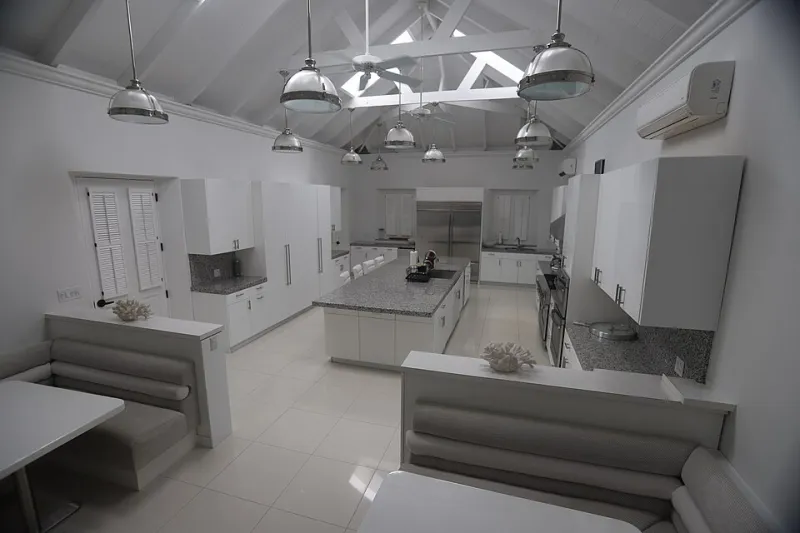
Photo: Category:Government of the United States Virgin Islands, Public domain, via Wikimedia Commons
The kitchen is the most-used room in most American homes — and also, statistically, the most expensive to renovate. A full kitchen remodel averages between $25,000 and $50,000 depending on your market. But here's a secret the home improvement world doesn't advertise loudly enough: a lot of what makes a kitchen feel dated has nothing to do with the layout or the bones. It's the surfaces, the finishes, and the details.
Change those, and you've changed the room.
Below are 10 projects you can realistically complete over a weekend (or a few evenings) that deliver outsized visual impact for a fraction of renovation costs. Each one includes a material cost estimate, an honest skill-level rating, and the key steps to get it done right.
1. Paint Your Cabinets
Estimated cost: $100–$250 | Skill level: Intermediate
This is the single biggest transformation on this list. Swapping dated oak or builder-grade cabinets for a fresh painted finish — think bright white, warm greige, or a bold navy — can make a kitchen look entirely different.
The key to a lasting result is prep. Remove all doors and hardware, clean surfaces thoroughly with a degreaser, sand lightly, apply a bonding primer, and use a cabinet-specific paint (brands like Benjamin Moore Advance or Sherwin-Williams Emerald Urethane are worth the extra spend). Use a foam roller for flat surfaces and a brush for corners and detail areas.
This project takes most of a weekend — more if you have a large kitchen — but the results are genuinely dramatic.
2. Swap Out Cabinet Hardware
Estimated cost: $50–$150 | Skill level: Beginner
New pulls and knobs are one of the fastest upgrades you can make. Brushed brass, matte black, and satin nickel are all trending right now and available at any Home Depot or Lowe's. If you're replacing hardware that's the same size and hole spacing, this is literally a screwdriver job.
If you're changing hole spacing, you'll need to fill old holes with wood filler, sand smooth, and touch up paint before installing. Still easy — just adds a step.
3. Install Peel-and-Stick Backsplash
Estimated cost: $50–$120 | Skill level: Beginner
Peel-and-stick backsplash tiles have come a long way in the past few years. Quality options from brands like Art3d or Aspect mimic real subway tile, stone, or mosaic patterns convincingly. They work best on smooth, clean, painted drywall.
Measure your backsplash area, cut tiles with scissors or a utility knife, and apply from the bottom up. Take your time lining up the grid and you'll have a polished result in an afternoon.
4. Replace Your Faucet
Estimated cost: $80–$200 (fixture) | Skill level: Beginner–Intermediate
A dated faucet ages a kitchen more than people realize. Replacing it is a project most homeowners can handle with an adjustable wrench, pliers, and a basin wrench (a long-handled tool specifically for reaching up into tight cabinet spaces).
Turn off the supply valves under the sink, disconnect the supply lines, unscrew the old faucet, and reverse the process with your new one. Budget about two hours and have a towel handy.
5. Add Under-Cabinet Lighting
Estimated cost: $40–$100 | Skill level: Beginner
Under-cabinet lighting is one of those upgrades that makes a kitchen feel more expensive and more functional at the same time. Plug-in LED strip lights or puck lights require no electrical work — just stick them up, run the cord discreetly along the cabinet bottom, and plug in. Hardwired options exist for a cleaner look but require more effort.
Warm white LEDs (2700K–3000K) give the most inviting glow for kitchen countertops.
6. Paint or Refinish Your Island
Estimated cost: $30–$80 | Skill level: Beginner–Intermediate
If your kitchen has an island, painting it a contrasting color to your perimeter cabinets is a designer-approved move that adds visual depth. A classic combo: white perimeter cabinets with a navy, forest green, or charcoal island. Use the same cabinet paint process described above, and take your time with the prep.
7. Regrout Your Tile
Estimated cost: $20–$50 | Skill level: Beginner
Dirty or cracked grout makes even nice tile look neglected. Regrouting is tedious but straightforward. Use a grout saw or oscillating tool to remove old grout (wear eye protection), vacuum the joints clean, mix and apply new grout with a float, and wipe away the haze with a damp sponge. Finish with a grout sealer once it's cured.
You can also try a grout pen for a quick refresh — it won't last as long, but it works well for minor discoloration.
8. Install Open Shelving (Remove a Cabinet Door)
Estimated cost: $0–$50 | Skill level: Beginner
Open shelving is a polarizing trend, but removing one or two upper cabinet doors to create open display space is low-commitment and costs almost nothing. Remove the door, fill the hinge holes, paint the interior of the cabinet to match or contrast, and style with a curated mix of dishes, plants, and everyday items.
If you don't love it, you can always rehang the door.
9. Apply a Fresh Coat of Paint to the Walls
Estimated cost: $40–$80 | Skill level: Beginner
It sounds simple because it is — but the impact is real. Kitchen walls take a beating from steam, grease, and general cooking activity. A fresh coat of paint in a current color immediately modernizes the space. Use a satin or semi-gloss finish in kitchens for easier cleaning.
Light warm neutrals, soft sage greens, and creamy off-whites are all popular choices right now that photograph beautifully and work across cabinet colors.
10. Upgrade Your Light Fixture
Estimated cost: $50–$200 | Skill level: Intermediate
A new pendant light or flush-mount fixture over the island or dining area pulls a kitchen together in a way that's hard to explain until you see it. If you're comfortable turning off the breaker, using a voltage tester, and following basic wiring instructions (most fixtures come with clear guides), this is a manageable DIY project.
Not comfortable with electrical? This is also a quick, affordable job for an electrician — often under an hour of labor.
Where to Start
If you're working with a tight budget and want maximum impact for minimum spend, start with paint (walls first, then cabinets if you have the energy), add new hardware, and swap the faucet. That combination alone can transform a kitchen for under $400 in most cases.
Layer in lighting, backsplash, and fixture upgrades as your budget allows, and you'll have a kitchen that looks like a thoughtful renovation — because it is one, just done on your terms and your timeline.
That's the whole point of DIY: your home, improved your way.