The Real Price of Waiting: How Postponing Outdoor Repairs Quietly Drains Your Bank Account
The Problem With "I'll Deal With It Later"
There's a particular kind of homeowner optimism that goes something like this: It's not that bad yet. I'll handle it in the spring. It's probably fine for another season. Sound familiar? Most of us have been there. Life is busy, money is tight, and that slightly soft spot on the deck isn't exactly screaming for attention.
But here's the uncomfortable truth that nobody really wants to sit with: doing nothing is still a decision. And in home repair terms, it's often the most expensive one you can make.
This isn't about guilt-tripping you into spending money you don't have. It's about understanding the math — because when you actually run the numbers, early intervention almost always wins. Dramatically.
What Decision Paralysis Actually Costs You
Psychologists call it "status quo bias" — the very human tendency to prefer inaction because action feels risky. You don't know exactly how much the repair will cost, you're not sure how bad the problem really is, and you'd rather not open that can of worms right now. So you wait.
The catch is that most home problems don't stabilize while you're waiting. They accelerate. Water finds new paths. Wood rots deeper. Small cracks become structural liabilities. The problem you were afraid to deal with six months ago is now twice as expensive and three times as disruptive.
Understanding this pattern is the first step to breaking it.
Decking: Where Small Rot Becomes a Full Rebuild
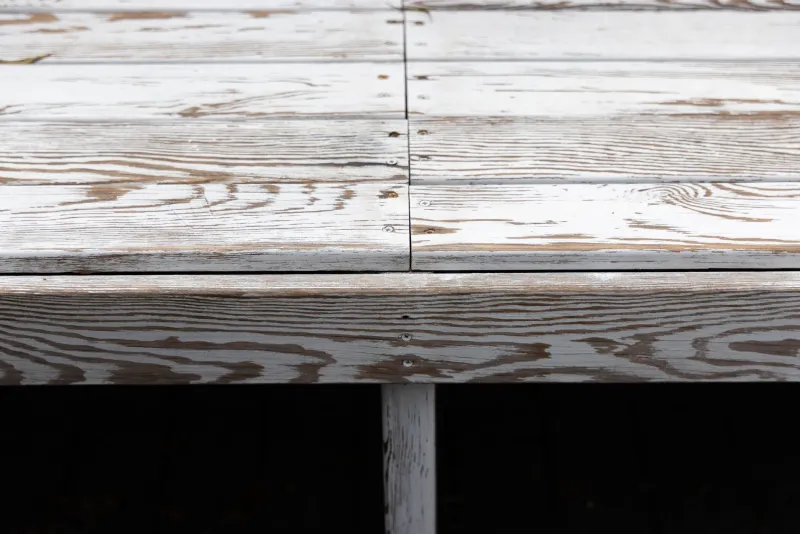
Let's start with something most American homeowners have in their backyard: a wooden deck. Maybe it's a decade old, maybe two. There's some graying, a couple of boards that flex a little more than they used to, and one post that you've been meaning to look at.
Here's how the numbers typically play out:
Year One — Localized rot on 2–3 boards: Replacing a handful of deck boards and treating the surrounding wood runs you somewhere in the range of $300 to $600 as a DIY project. A couple of weekend hours, some new lumber, deck screws, and a waterproof sealant.
Year Three — Rot spreads to joists and ledger board: Now you're looking at structural components. The ledger board (the piece that connects your deck to your house) is often the first casualty of ignored surface rot. Replacing it, along with compromised joists, typically runs $1,500 to $4,000 even as a skilled DIY job — and if you're hiring out, double that.
Year Five — Full rebuild required: At this point, the framing is compromised, the footings may need inspection, and local building codes may require a permit for the rebuild. You're now looking at $8,000 to $20,000 for a full deck replacement, depending on size and materials.
That original $400 problem? It just became a $15,000 regret.
Roofing: The Leak That Keeps on Taking
Roofing is one of the most psychologically easy things to ignore because most of us aren't up there looking at it regularly. A missing shingle or cracked flashing doesn't feel urgent — until water starts showing up somewhere it shouldn't.
A single damaged flashing repair or shingle replacement costs somewhere between $150 and $400. It's a straightforward fix, and most handy homeowners can tackle it safely with the right precautions.
Leave that same vulnerability unaddressed through one wet season, and water infiltration begins working on your roof deck (the plywood layer beneath your shingles). Replacing a section of damaged roof deck adds $500 to $1,500 to the job.
Let it go another season, and now you're dealing with attic insulation damage, potential mold remediation, and possibly ceiling drywall replacement inside the home. That total repair bill can easily clear $6,000 to $12,000 — for a problem that started as a $200 fix.
The cruel irony of roof damage is that it's rarely visible until it's already done significant work behind your walls and above your ceilings.
Foundation Issues: The Compound Interest of Home Damage
Nothing triggers homeowner anxiety quite like the word "foundation," and for good reason. But here's what most people don't realize: the earliest signs of foundation stress — minor wall cracks, a door that suddenly doesn't latch right, a slight slope in a floor — are often manageable and relatively affordable to address.
A minor foundation crack sealed with epoxy injection typically costs $250 to $800 as a professional repair, and some hairline cracks are DIY-able with the right materials from your local hardware store.
Ignore those early warning signs and allow water to continue working through those cracks, and you're looking at potential underpinning, drainage system installation, and in serious cases, partial foundation reconstruction. We're talking $10,000 to $40,000+ depending on your region, soil type, and the extent of movement.
Foundation repairs are also one of the biggest red flags for home buyers, meaning an unaddressed issue doesn't just cost you in repairs — it tanks your resale value and can make your home difficult to sell at all.
How to Break the Cycle: A Practical Framework
So how do you actually change the habit of deferral? Here are a few approaches that work:
Do a seasonal walk-around. Twice a year — spring and fall — physically walk your property and look at your deck, roof (from the ground with binoculars is fine), gutters, foundation perimeter, and exterior siding. You're not inspecting for perfection. You're looking for changes from last time.
Categorize, don't catastrophize. When you spot something, resist the urge to either dismiss it or spiral into worst-case thinking. Instead, categorize it: Is this cosmetic? Is this functional but stable? Is this actively getting worse? That last category gets addressed first.
Get a quote, even if you're not ready to act. One of the biggest drivers of delay is not knowing what something will cost. Call a contractor or price out materials at your local home improvement store. Once you have a real number, the decision becomes clearer.
Create a dedicated repair fund. Even setting aside $50 to $100 per month into a home maintenance account changes your psychology around repairs. When the money exists, the decision to act becomes much easier.
The ROI of Acting Early Is Almost Always Positive
Here's the reframe that might actually move the needle for you: early repairs aren't an expense. They're an investment with a measurable return.
Spending $400 today to avoid a $12,000 repair in three years is a better financial decision than almost anything else you could do with that money. The "return" is the avoided cost — and in home maintenance, avoided costs are very, very real.
Your home is likely the largest asset you own. Treating its maintenance as optional is a little like skipping oil changes on a car you depend on daily. It feels fine — right up until it really, really doesn't.
The projects you're putting off aren't going anywhere. But the longer they wait, the more they'll cost when you finally do deal with them. The best time to fix the deck was two years ago. The second best time is this weekend.