Before You Fall in Love With That Cheap House: A Room-by-Room Fixer-Upper Audit
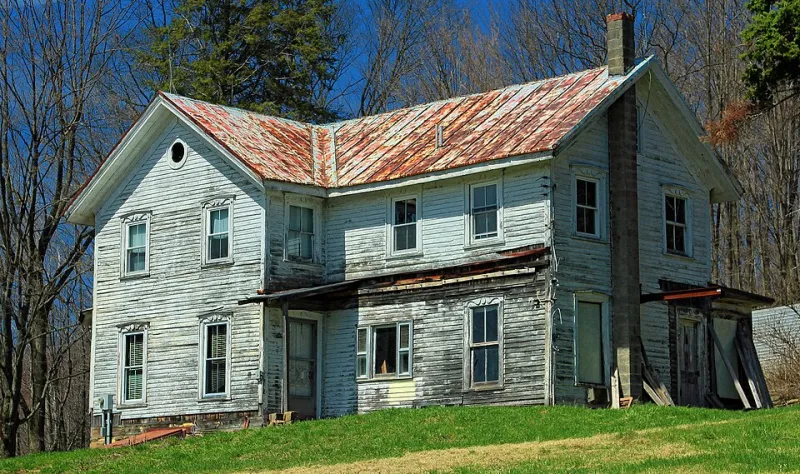
Photo: Nicholas A. Tonelli from Northeast Pennsylvania, USA, CC BY 2.0, via Wikimedia Commons
Every fixer-upper listing has the same seductive math: a $60,000 discount compared to the renovated house two streets over. What the listing doesn't show you is which rooms are hiding five-figure surprises and which ones are genuinely easy wins. After enough stories of buyers who spent their entire renovation budget on problems they couldn't see, we think every prospective fixer owner needs to do a cold-eyed, room-by-room audit before signing anything.
Here's the framework — ranked from where the money disappears fastest to where the easy wins live.
The Big Three: Where Budgets Go to Die
The basement and foundation. This is the room that decides everything. Horizontal cracks, bowing walls, water lines halfway up the concrete, or a sump pump running like it's training for a marathon — these aren't $2,000 problems. Foundation work routinely runs $10,000 to $40,000, and it's not optional or skippable. Bring a flashlight, look at the corners, sniff for mildew, and check whether the previous owner has been painting over suspicious stains.
The electrical system. A knob-and-tube or outdated panel doesn't just cost money to replace ($4,000–$10,000 typically) — it can block insurance, fail inspection, and complicate every other project downstream. Pop the panel cover (or have your inspector do it) and look for a brand like Federal Pacific, which insurers often flag. If the house is pre-1960 and never updated, assume the whole system is a line item.
The roof and everything under it. Missing shingles are obvious, but the real tell is inside: water stains on attic sheathing, daylight through the boards, insulation that's matted and dark. A roof replacement is $8,000–$20,000 depending on size and material, and a leaky roof quietly destroys insulation, drywall, and framing while you're saving up.
The Middle Tier: Expensive but Predictable
Kitchens get all the attention, but here's the secret: they're expensive only if you make them so. A kitchen with a sane layout, decent cabinet boxes, and working plumbing can be refreshed for a fraction of a full gut. The expensive version — moving plumbing, tearing out walls, relocating the gas line — is a choice, not a requirement. Judge the kitchen on layout and plumbing condition, not on whether the countertops are ugly.
Bathrooms are less forgiving. A bathroom over an unfinished basement is actually easier to work on than one sandwiched between finished floors. Check for soft spots around the toilet, grout that's been caulked over repeatedly, and any signs of a slow leak in the ceiling below.
Windows fall here too. Full replacement across a whole house is a brutal bill, but most fixers don't need it — repair, weatherstripping, and strategic replacement handles most cases.
The Easy Wins: Where You Build Sweat Equity
Bedrooms and living rooms are just drywall, paint, and flooring. Ugly is cheap to fix in these rooms. A $500 paint-and-lighting refresh transforms a space that a buyer would have discounted $10,000 for.
Paint, trim, and doors throughout the house are the highest-ROI, lowest-skill work in renovation. If the house's problems are mostly cosmetic, that's not a fixer-upper — that's a discount.
Landscaping and curb appeal cost sweat more than money. Overgrown isn't broken.
The Framework: Price It Like a Pro
Before you sign, do this:
- Get a real inspection, then a specialist inspection. A general inspector flags issues; a foundation contractor and an electrician price them. Those two extra reports cost a few hundred dollars and can save you tens of thousands.
- Build the repair list first, the wish list second. Foundation, roof, electrical, plumbing, HVAC come before any design decisions. If the repair list alone eats your discount plus 20%, walk away.
- Add 20% to every estimate, minimum. Fixer-uppers reveal secrets during demolition. Every single time.
- Price your own labor honestly. DIY saves money only on the projects you'll actually finish. Be honest about which ones those are.
The Honest Opinion
A fixer-upper is a fantastic deal for a buyer who can do cosmetic work, tolerate living in dust, and hold the house for five-plus years. It's a terrible deal for anyone who needs to move in next month, can't stomach surprise costs, or is buying in a market where renovated homes aren't that much more expensive anyway.
The discount on the sticker is real. So is the invoice hiding behind it. Walk every room with your eyes open — and your calculator out — before you sign.